
 EN
EN
 ar
ar bg
bg hr
hr cs
cs da
da nl
nl fi
fi fr
fr de
de el
el hi
hi it
it ko
ko no
no pl
pl pt
pt ro
ro ru
ru es
es sv
sv tl
tl iw
iw id
id lv
lv lt
lt sr
sr sk
sk sl
sl uk
uk vi
vi et
et hu
hu th
th tr
tr fa
fa ms
ms hy
hy ka
ka ur
ur bn
bn mn
mn ta
ta kk
kk uz
uz ku
ku
weir flow meter Localization
Kingmach weir flow meter Localization can serve both short-term testing and long-term operation. During commissioning, the project team may need to confirm that the weir section is stable, the water head reading responds sensibly, and the data path records the correct point. During long-term use, the owner may care more about trends, maintenance events, seasonal changes, and abnormal flow patterns. The same measuring point must support both phases. That means the handover file should include drawings, photographs, channel notes, cleaning access, first stable readings, data channel names, and maintenance instructions. If the point is later repaired or cleaned, the maintenance note should remain visible beside the curve. This keeps the record useful after the original installation team has left. Handover quality has a direct effect on future trust. New operators should know why the point was installed, where the water comes from, what conditions make the reading unreliable, and how to recognize a channel problem. Photos before and after cleaning, a simple access route, and a short note about expected seasonal behavior can prevent confusion years after installation. Good documentation turns one monitoring point into a durable operating asset rather than a forgotten instrument record. It also makes later audits faster and more consistent.
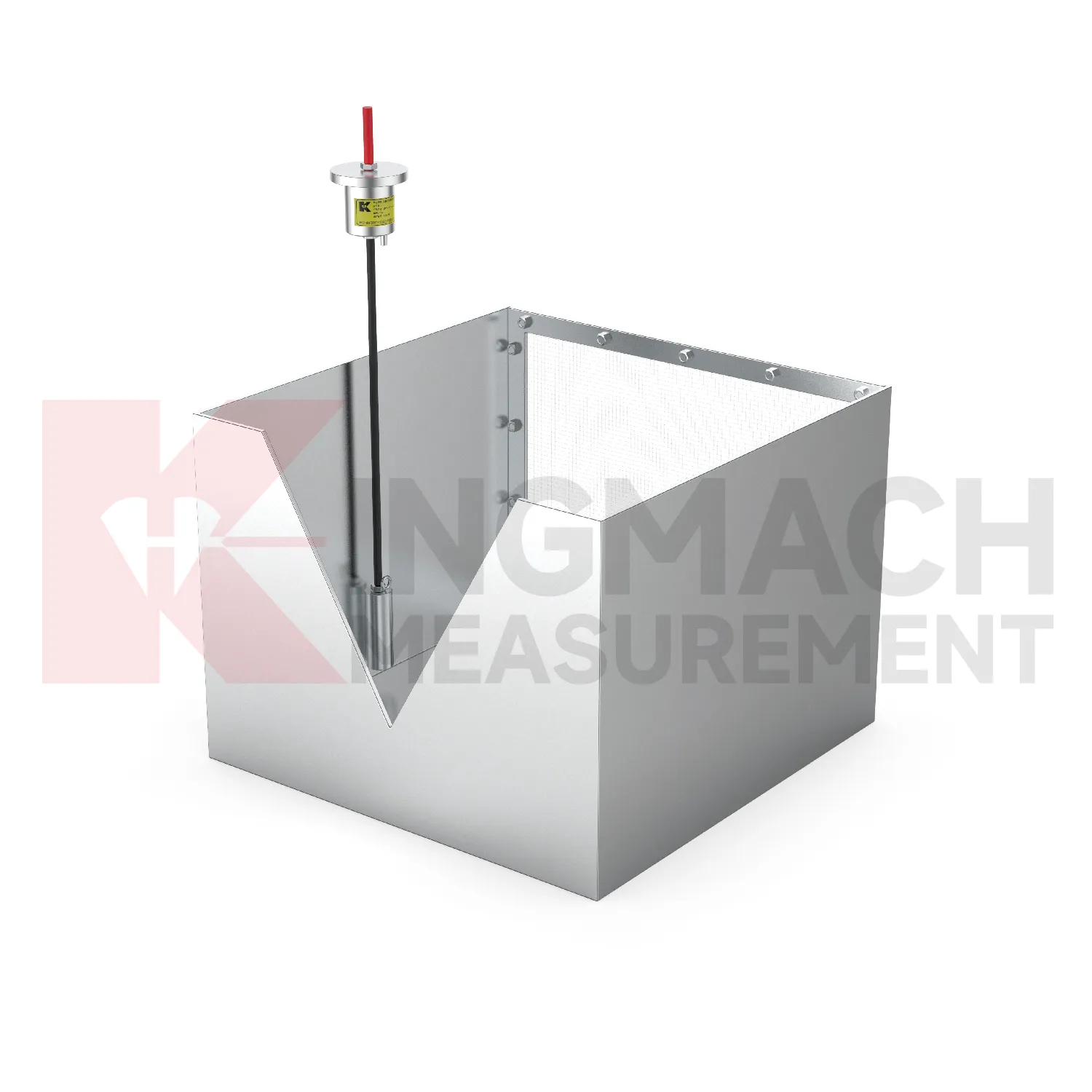
Application of weir flow meter Localization
Drainage systems use Kingmach weir flow meter Localization to understand how water leaves a site during routine conditions and storm events. In urban drainage, construction drainage, tunnel drainage, and industrial outfalls, operators often need to know whether flow is increasing, delayed, reduced, or blocked. A weir-based record can help compare rainfall timing with discharge timing. If rain stops but flow remains high, the system may be draining stored water. If rainfall is heavy but flow is lower than expected, blockage, sediment, pump operation, or downstream backwater may need inspection. The monitoring point should be installed where it represents the drainage channel, not where turbulence or local obstruction dominates. A clear drainage record supports maintenance scheduling and post-storm review. It can also help teams document what happened during a specific rain event without relying on memory. The report should connect the curve with rainfall time, cleaning work, pump changes, outlet condition, and any temporary diversion. That makes it easier to decide whether the drainage network behaved normally, whether capacity is being lost, or whether a local restriction needs field attention before the next storm. The same record can guide cleaning intervals and help justify drainage improvements when repeated restrictions appear. before problems escalate further.
The future of weir flow meter Localization
Compatibility will remain important for future Kingmach weir flow meter Localization. A flow point needs a physical measuring section, water head record, enclosure, power, communication, platform channel, and maintenance route. If these parts are not planned together, the site may produce data but remain difficult to operate. Future specifications should describe the workflow: how data is collected, how alarms are reviewed, how cleaning is recorded, and how flow is compared with related site conditions. This workflow view is more useful than naming hardware alone. It helps owners keep the measurement working through installation, operation, repair, and handover. The next generation of projects will also need cleaner links between field staff and office reviewers. A technician should be able to attach notes, photos, access issues, and cleaning records to the same monitoring point that engineers use for reporting. That shared record reduces confusion when equipment, platform settings, or site responsibilities change over time.
Care & Maintenance of weir flow meter Localization
Water head measurement for Kingmach weir flow meter Localization needs a stable reference. If the head location is disturbed by turbulence, air bubbles, sediment, trapped debris, or local backwater, the calculated flow behavior may no longer represent the channel. Inspect the sensing area and confirm that the water surface is calm enough for the intended measurement. The reference point should be documented in drawings and photographs. If maintenance changes the weir, channel wall, or sensing position, the record should say so. A stable reference protects long-term comparability, especially when operators compare present flow with past events. Maintenance staff should avoid moving brackets, tubes, labels, or reference marks without updating the file. Even a small field change can confuse later review if it is not recorded. After any adjustment, the first stable reading should be saved with a note about site condition, weather, and visible channel behavior. This keeps future flow interpretation tied to a known physical point.
Kingmach weir flow meter Localization
For water conservancy and drainage work, Kingmach weir flow meter Localization helps turn routine channel observation into a record that can be compared over time. Manual checks may capture a single moment, but automatic flow monitoring can show daily rhythm, storm response, operating changes, and abnormal behavior. The data is useful when it answers practical questions: Is the channel passing expected flow? Did a maintenance action restore capacity? Did a rainfall event create delayed discharge? Did sediment or debris affect the measurement? A strong flow monitoring plan connects the weir point with field inspection and maintenance notes so the number remains explainable. The value is not only in collecting a level reading. It is in creating a stable reference for how a channel behaves under normal use, heavy rain, seasonal change, and maintenance activity. When the same location is observed consistently, operators can see whether the site is changing gradually or reacting to a specific event.
FAQ
Q: What is Kingmach weir flow meter Localization used for?
A: It is used to measure open-channel flow by reading water head at a controlled weir section and turning that change into a repeatable flow record.
Q: Where can it be applied?
A: It can support water conservancy, drainage, irrigation, tunnel discharge, dam drainage, construction runoff, industrial water channels, and water resource management.
Q: Why use a weir for flow monitoring?
A: A weir creates a stable hydraulic control section, making it easier to compare flow behavior over time when the channel is maintained properly.
Q: What makes the record useful?
A: A useful record links flow with site events such as rainfall, gate operation, cleaning, seepage, pump activity, or inspection findings.
Q: Should the meter be treated as a standalone device?
A: No. It should be treated as a measuring point that includes the channel, weir crest, water head reference, data path, and maintenance access. Maintenance teams need a record that tells them where to look. If a curve drops slowly, cleaning and sediment checks may come first. If it rises suddenly during dry conditions, upstream operation or a changed drainage path may deserve attention.
Reviews
Robert Taylor
The weir flow meter is well-built and delivers accurate measurements. Great value for water management applications.
David Wilson
We purchased displacement transducers and settlement sensors, and the quality exceeded our expectations. Easy installation and reliable performance.
Latest Inquiries
To protect the privacy of our buyers, only public service email domains like Gmail, Yahoo, and MSN will be displayed. Additionally, only a limited portion of the inquiry content will be shown.
Amelia***@gmail.comSingapore
Hello, I am looking for visualization software for monitoring system data analysis. Please let me kn...
Isabella***@gmail.comGermany
Hello, we are evaluating weir flow meters for a water management project. Please share accuracy deta...
Related product categories
- Intelligent Weir Flow Meter
- Smart Weir Flow Meter
- weir flow meter
- weir type flow meter
- weir flow meter Price
- weir flow meter Manufacturer
- weir flow meter Supplier
- weir flow meter Solution
- weir flow meter System Integration
- weir flow meter Localization
- weir flow meter Domestic Manufacturing
- weir flow meter China