
 EN
EN
 ar
ar bg
bg hr
hr cs
cs da
da nl
nl fi
fi fr
fr de
de el
el hi
hi it
it ko
ko no
no pl
pl pt
pt ro
ro ru
ru es
es sv
sv tl
tl iw
iw id
id lv
lv lt
lt sr
sr sk
sk sl
sl uk
uk vi
vi et
et hu
hu th
th tr
tr fa
fa ms
ms hy
hy ka
ka ur
ur bn
bn mn
mn ta
ta kk
kk uz
uz ku
ku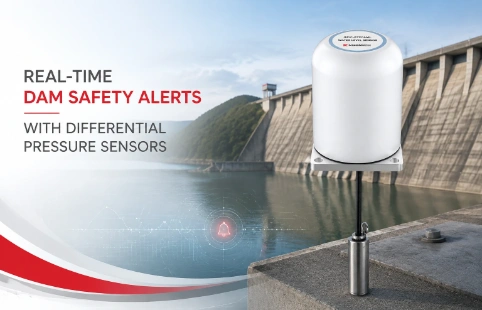
Real-Time Dam Safety Alerts with Differential Pressure Water Level Sensors
Key Takeaways An alert chain needs more than a sensor: define field in...

Soil Water Content Sensor That Works in Real Conditions
You can’t control what the soil does, but you can measure it accurately. In slope stability projects, irrigation scheduling, or landfill cover monitoring, a slight misreading of water content can lead to wrong decisions. Most sensors work fine in the lab, but real sites come with temperature swings, salinity shifts, and rough handling. That’s where Kingmarch’s soil water content sensors make a difference. They’re built on field-proven measurement principles and don’t require delicate handling. We’ve been supplying these to monitoring contractors and research groups across Asia, Europe, and the Americas, often customizing cable lengths or output formats to match existing loggers. This page breaks down how the sensor works, where it fits, and what to ask before you order.
Technical Detail
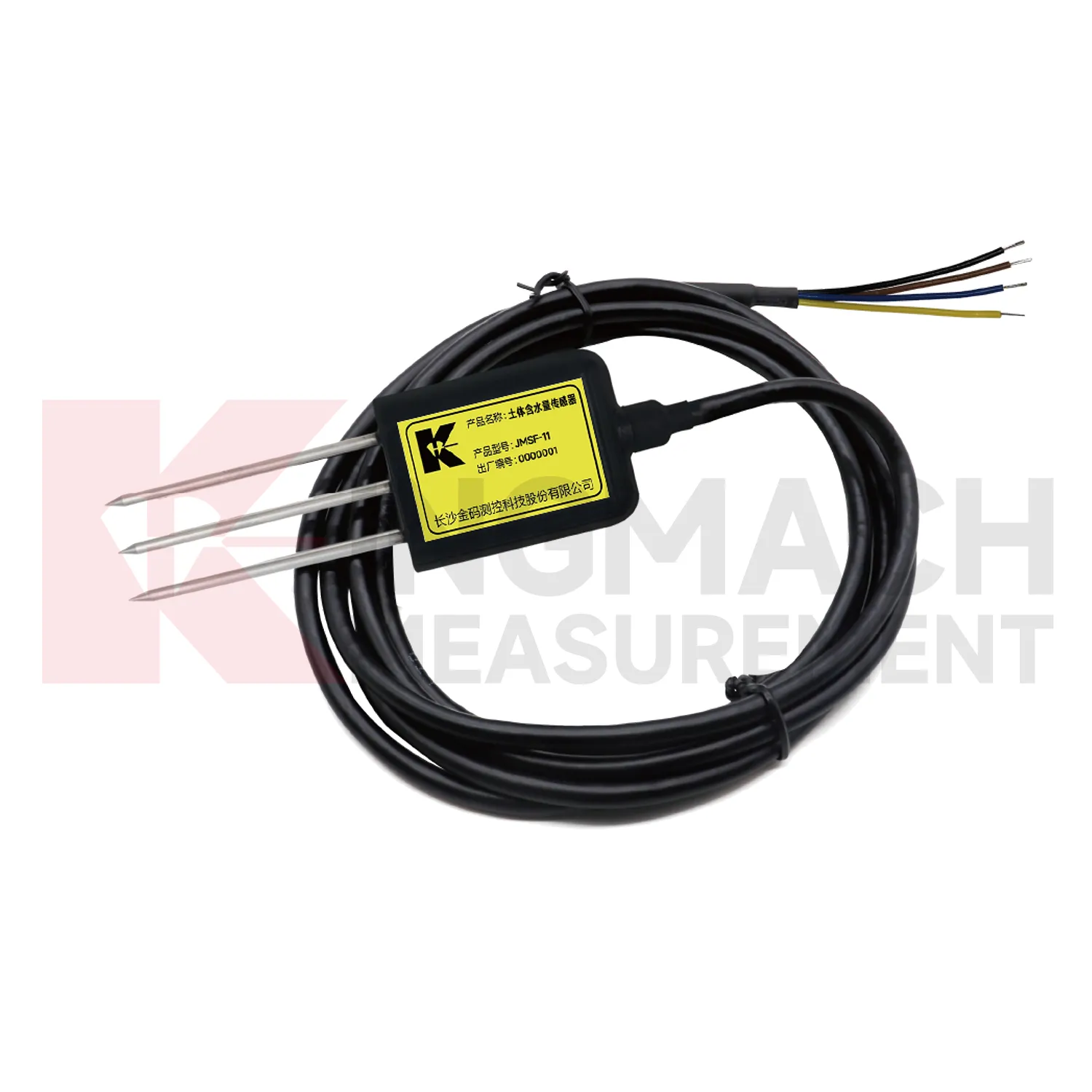
A soil water content sensor measures volumetric water content (VWC) in soil or other porous media. Kingmarch’s version uses the capacitance method—a high-frequency oscillator detects changes in the soil’s dielectric permittivity, which is dominated by water content. The sensor outputs an analog voltage or a digital signal (RS485/Modbus), so it talks to most dataloggers and RTUs without extra signal conditioners. The sensing head is made from corrosion-resistant stainless steel and sealed with industrial-grade epoxy. The electronics sit inside a compact IP68 housing. This isn’t a lab instrument; it’s meant to stay buried for years. The two-prong fork design simplifies insertion—you don’t need a perfect auger hole. If you’re dealing with rocky or clay-heavy soil, we can supply a pilot rod and installation kit. Kingmarch doesn’t just ship a sensor. We pre-configure the output range to your data acquisition system, whether it’s a Campbell Scientific logger, a PLC, or a wireless node. Custom cable lengths up to 50 meters are standard, and we can add a radiation shield for exposed installations. The sensor’s measurement volume is roughly a cylinder of 5 cm radius around the prongs, which covers the root zone in most agronomic applications and the critical shear zone in shallow landslide monitoring. Temperature compensation is built into the signal processing, so readings stay stable from -20°C to 60°C. For saline soils, we recommend a soil-specific calibration; our support team can guide you through a simple two-point calibration procedure using local samples. The sensor doesn’t require periodic recalibration unless physical damage occurs. Compared to TDR sensors, the capacitance approach costs less and draws less power—important for solar-powered stations. The compromise is slightly lower accuracy in highly conductive soils, but for most geotechnical and agricultural tasks, the data is more than reliable enough to track trends and trigger alerts. If you need traceable accuracy, ask about our lab-calibrated options with a calibration certificate.
News
Key Takeaways An alert chain needs more than a sensor: define field in...
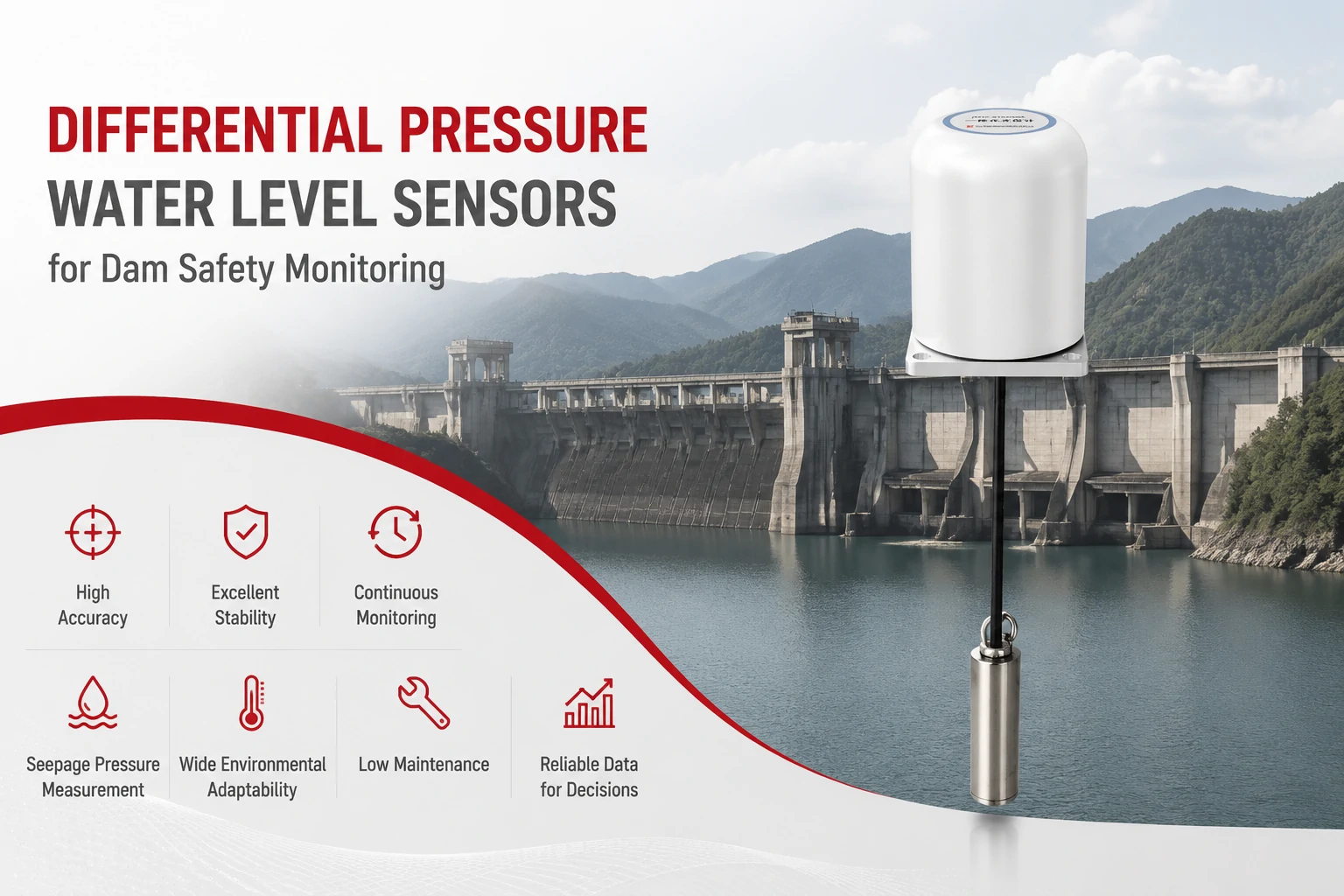
Key Takeaways The strongest fit is usually a confined, submerged, or s...
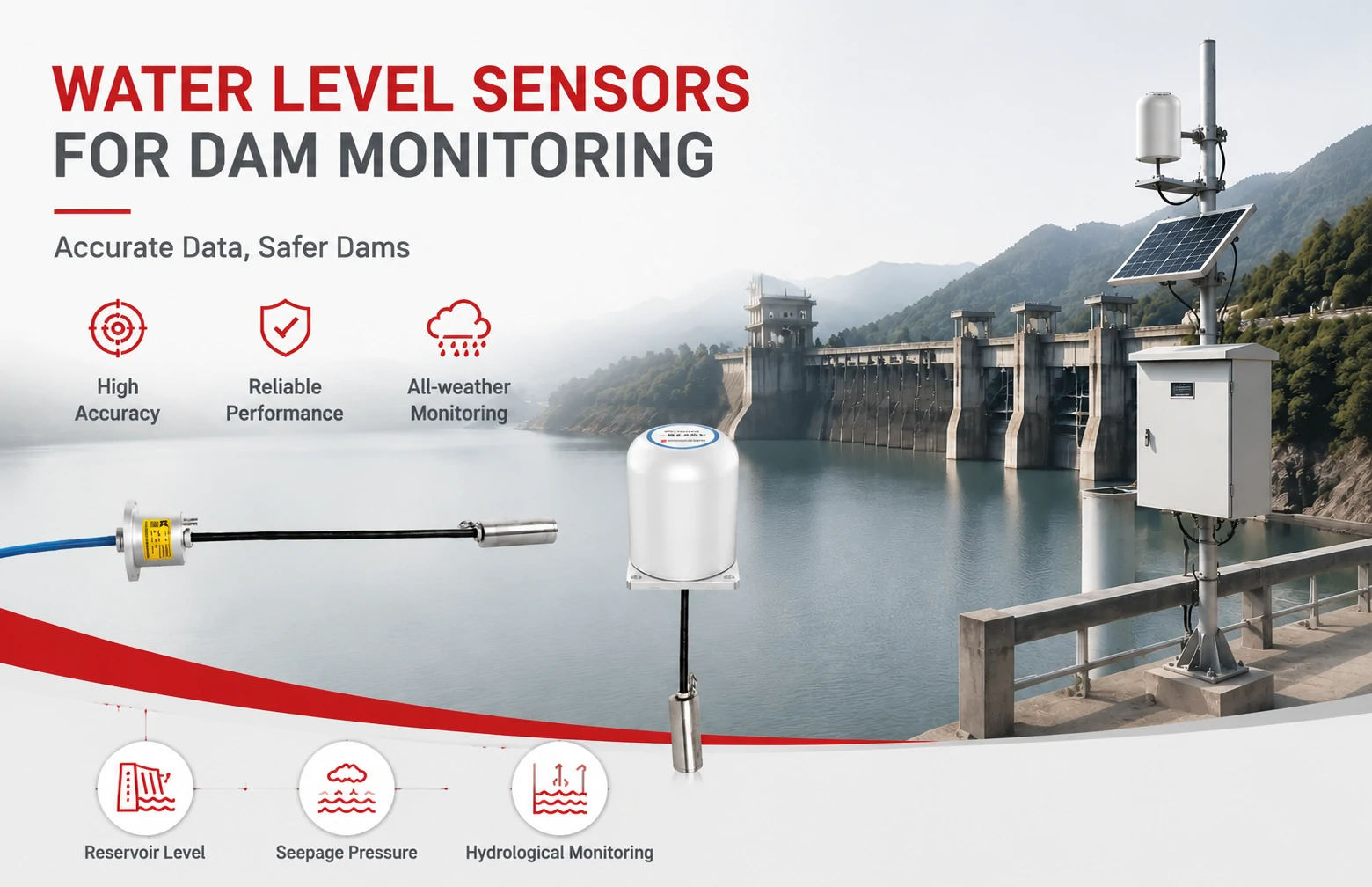
Kingmach Water Level Sensors for Dam Monitoring: A Buyer's Guide to Differential Pre...
Products
FAQ
Capacitance sensors typically give around ±2-3% VWC accuracy after site-specific calibration. For landslide early warning, this is usually fine because you’re looking at relative changes over time, not absolute values. If the soil has high clay content or salinity, a custom calibration using local samples brings the error down. Kingmarch can pre-load a calibration curve if you send a few soil samples.
Most likely yes. The sensor outputs 0-1V or 4-20mA analog signals, which nearly all loggers accept. If you need RS485 Modbus, that’s an option too. Just tell us your logger model when ordering; we’ll match the wiring and signal range so you can plug it in without extra converters.
The two-prong fork can be pushed into soft soil by hand, but for compacted or rocky ground, we recommend pre-drilling a pilot hole with the included guide rod. The rod creates a path slightly smaller than the prong spacing, so the sensor still makes firm contact. Avoid hammering the sensor directly. For very stony profiles, a 45-degree angled installation can help bypass large rocks while keeping the prongs in the target zone.
The sensor doesn’t drift over time because there’s no chemical reaction involved. As long as the housing remains intact and the cable isn’t damaged, you can leave it in the ground for 5+ years. If the readings suddenly become erratic, check for animal chewing or physical impact. A periodic inspection of the connector and cable jacket is enough. Recalibration is only needed if you move it to a drastically different soil type.
The sensor is primarily designed for mineral soils, but it can work in other granular media with a custom calibration. For compost, peat, or stored grains, the dielectric behavior differs, so the factory curve won’t be accurate. You would need to perform a gravimetric calibration yourself, or we can develop one for your substrate if you provide reference samples. The same sensor hardware handles it; it’s just a matter of inputting the right calibration coefficients.
Share your product type, target capacity, and application requirements. Our team can review the details and recommend a practical next step.
If you are interested in our products or want to become our partner.
Please leave your contact information, our team will contact you as soon as possible.
Mail: [email protected]
Contact Us: +8613808434127
Address: No. 188 Tongzipo West Rd, Changsha, Hunan, China